

High-Density Hydroponic Systems for Strawberry Cultivation
By incorporating automated plant movement, the system enables densities of up to 300,000 plants per hectare while preserving complete operational accessibility and maximizing light interception across the crop.
Maximizing Project Profitability from the Design Stage

The greatest risk in protected agriculture is not, in most cases, the initial investment, but rather the operating cost. Traditional models penalize margins with high labor costs and inefficient climate control due to low planting density.
Reduce unit cost per harvested kilogram and maximize operating margin.
Industrialized crop production. Ultra-high planting densities of 200% to 300% above conventional systems significantly reduce energy consumption for heating and cooling on a per-kilogram-of-harvest basis
Energy and Labor Efficiency. We transform a labor-intensive model into an optimized industrial process, drastically reducing the weight of payroll and utilities in the P&L.

You know the physical limit of your land. Your margins narrow not due to lack of know-how, but because of space inefficiency and the progressive increase in labor costs.
Break through the production ceiling of your current hectares and reduce labor dependency.
Unlock the full potential of your existing hectares by eliminating empty spaces and maximizing crop density, without investing in additional land.
OPEX / Kg (Operating cost reduction).
| Production Scenario | Actual Density (Plants/Ha) | Business Impact |
|---|---|---|
| Traditional soil | 45,000 – 60,000 | Operational Inefficiency (Skyrocketing labor costs and sanitary risk). |
| Fixed hydroponics | 90,000 – 100,000 | Sanitary Improvement and quality increase |
| NGS oscillating/rotational | 160,000 – 200,000 | EBITDA Maximization (High density + Ergonomics) |
Bespoke engineering to your production scenario
The success of any project relies on the seamless integration of the hydroponic system, greenhouse design, and local climate conditions.
Unlock profitable active climate control. By concentrating production, you maximize the return on every euro invested while lowering the energy cost per plant.
TECHNOLOGY Suspended cultivation lines that oscillate vertically, eliminating the need for aisles.
DENSITY Up to 200,000 Plants/Ha. In some latitudes up to 300,000 pl/ha.
CLIMATE AND REQUIREMENTS Climate: Extreme (Severe cold or heat). Environments where heating or cooling cost is high and requires maximum efficiency. Recommended Greenhouse: Glass or reinforced multitunnel with controlled climate.
TYPICAL PROFILE: Producers in challenging climates (Northern-Eastern Europe, or North America) who need to reduce the high energy and labour cost.
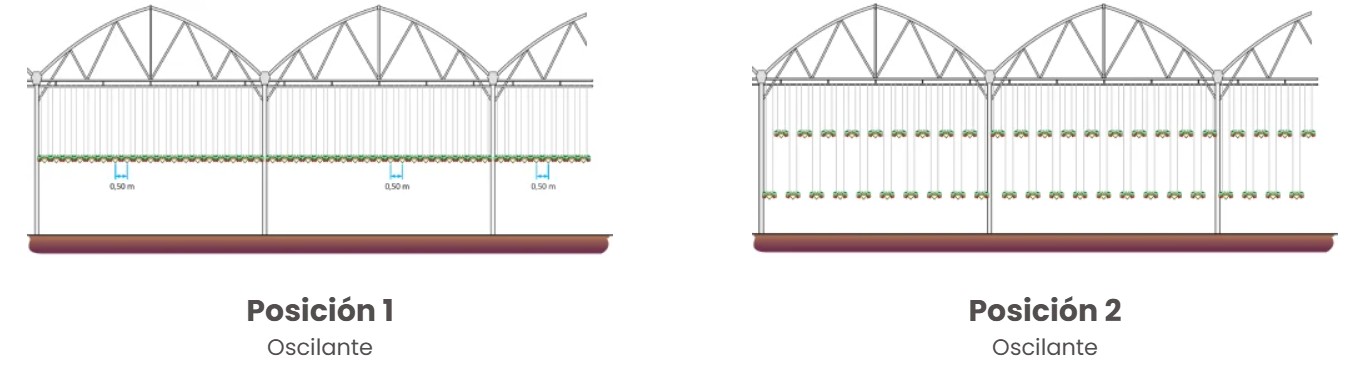
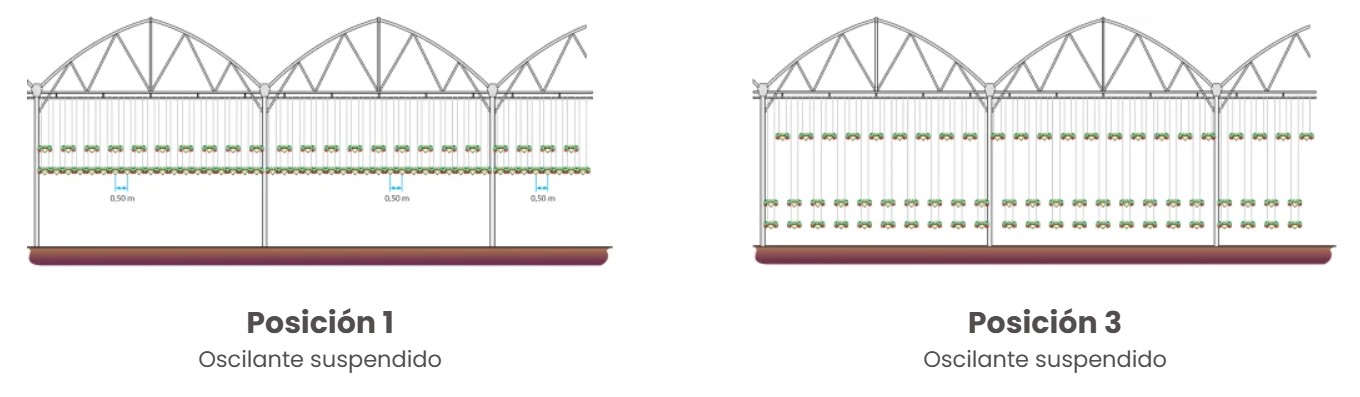
Worldwide patented system
Rotational automation designed for operations where the cost of climate-controlled square meters is a key factor.
NGS rotational is the only high-density strawberry system that does not need to rely on the greenhouse structure.
TECHNOLOGY: Vertical carousel system that rotates the growing lines to a fixed harvesting point. The structure is completely self-supporting and does not impose any load on the greenhouse.
DENSITY 160,000 – 200,000 pl/ha depending on light conditions and varieties.
CLIMATE AND REQUIREMENTS Climate: Temperate/Rainy/Cold. Recommended greenhouse: High-tunnel, hoop houses or light structures. Specifically designed for installations without load-bearing capacity. Ideal for existing greenhouses.
PROFILE Producers with space limitations or high operating costs due to energy and/or labour.
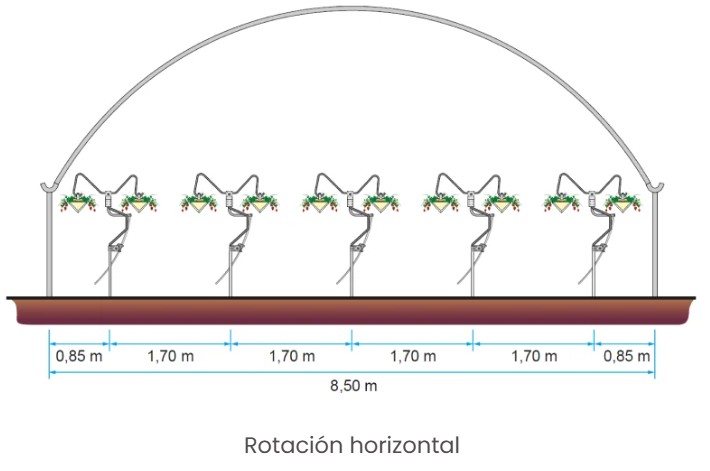
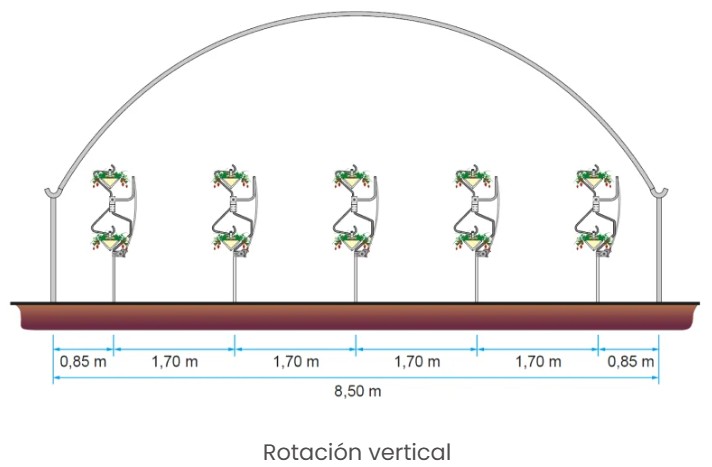
The professional evolution of traditional cultivation, reducing labor and disease risks.
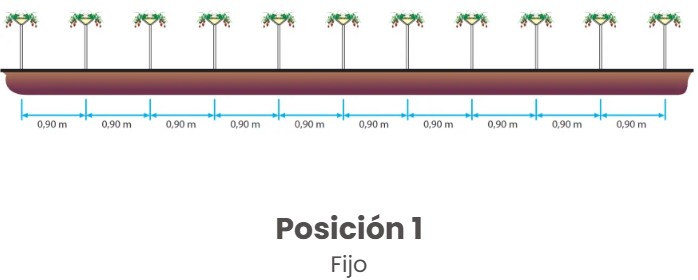
TECHNOLOGY Fixed structure on posts with the NGS recirculating hydroponic system. No need to change substrate every 1-2 years.
DENSITY 75,000 – 100,000 Plants/Ha.
CLIMATE AND REQUIREMENTS: Adaptable to any zone, but is the technical reference for Tropical / Humid Climates. Recommended Greenhouse: Tropical, Macrotunnel, or Mesh. Its elevated design ensures critical separation from the ground. This allows maximum ventilation beneath the crop, preventing condensation and the proliferation of fungi and diseases typical of high relative humidity environments.
PROFILE Producers moving from soil cultivation to hydroponics to increase efficiency, reduce labor dependency, and secure consistent harvests.
High-tech or low-tech? The real question is: what's the right-tech for your operation?
The difference between "Traditional Hydroponics" and NGS® System
Although our cultivation systems are compatible with traditional hydroponics solutions, to save operating costs we needed to eliminate the need for periodic replacement (1-2 years) of substrate bags.

The NGS System replaces the cultivation bag by introducing the substrate into a polyethylene multilayer system that allows reusing the substrate for many years.

The lower thermal inertia of NGS cultivation channels reduces both exposure time to intense cold during the night and excessive heat during the day, allowing the root to remain under optimal conditions for longer periods, which translates into crop precocity.

A 100% recirculating system that recovers and reuses drainage, achieving water and fertilizer savings of 50-60% compared to soil cultivation.